All Categories
Featured

How SEO Support Bridges the Space In Between PR and Hyperlinks
Table of Contents
The 2026 Requirement for Authority and Trust
The search environment in 2026 has actually transitioned away from basic mathematical metrics towards a model defined by proven proficiency and entity relationships. In previous years, a link was often deemed a mere vote of confidence. Now, search algorithms treat a backlink as a data-rich bridge in between two acknowledged entities. If a link does not carry the weight of a validated author or a recognized topical leader, its influence on rankings is negligible. This modification shows a more comprehensive movement by online search engine to prioritize human-verified content over the enormous increase of automated text that flooded the web over the last 2 years.
Developing a profile that endures existing algorithmic analysis needs a focus on what is now called "contextual persistence." Links that appear in short-lived or low-traffic environments are discounted practically instantly. Instead, the focus has moved to deep-site integration where a citation lives within the core content of a high-traffic resource. Success in the existing market includes prioritizing Optimization Tactics over mere volume. When a domain receives a citation from a source that online search engine currently trust as a primary authority, the resulting boost in exposure is far more substantial than what was seen in the past.
Browse engines now use "Neural-Semantic Link Graphs" to identify the validity of a backlink. These charts look beyond the anchor text to analyze the surrounding paragraphs, the history of the connecting domain, and the particular expertise of the individuals contributing to that site. If a link comes from a page that does not have a clear expert-identity signal, it might be flagged as low-value regardless of the site's overall domain rating. This makes the choice of partners and sources a matter of extreme examination for anybody managing a digital presence in 2026.
The Shift Towards Semantic Significance and Entity Linking
The principle of "domain authority" has been changed by "topical sovereignty." A site no longer has a single authority rating that applies to every page. Instead, a website may be a high-authority source for financial suggestions but a low-authority source for technical hardware. Hyperlinks are weighted based on this topical overlap. A link from a leading medical journal to a health-tech startup brings enormous weight, whereas a link from the exact same journal to a genuine estate firm supplies little to no benefit in 2026. This topical clustering makes sure that search engine result remain pertinent and hard to control through old-school link acquisition approaches.
Information from the early part of 2026 recommends that search engines are also looking at the "age of the relationship" in between entities. Frequent, natural discusses between 2 associated organizations over several months develop a stronger signal than a one-off placement. This has actually caused an increase in long-lasting material partnerships where professionals work together on research study documents, whitepapers, and interactive datasets. Using high-level content syndication has become a basic method for making sure that these relationships are recorded and recognized by search spiders.
Comprehensive Building Manual Guides now requires an advanced technique to data attribution. It is no longer adequate to simply be discussed. The mention must be connected to a specific claim, fact, or unique insight that the target website provides. Online search engine have ended up being proficient at identifying "empty links" that serve no purpose besides SEO. These are now neglected or, in many cases, result in a suppression of the page's ability to pass equity. The focus is completely on energy. Does the link assist the user discover more comprehensive info that is not already present on the page? If the response is no, the link supplies no worth to the profile.
The Role of Professional Identity in Link Equity
One of the most substantial advancements in 2026 is the combination of confirmed identity into the link chart. Browse engines now cross-reference the authors of connecting articles with expert databases, social profiles, and historical contributions. A post written by an understood specialist in a field passes significantly more "trust juice" than an anonymous post or one produced by a standard AI design without human oversight. This has made the procurement of citations from acknowledged market leaders the most sought-after goal in any link-building method.
Establishing a footprint through Optimization Tactics in 2026 develops the required trust signals for long-lasting visibility. When an expert links to a resource, they are essentially staking their expert track record on the quality of that info. The algorithms of 2026 are designed to spot this expert danger and reward it. This is why many organizations have actually moved away from generic outreach and towards developing genuine relationships with individuals who define their markets. The human aspect of the web has actually become the ultimate filter for quality.
Preserving Performance in a Post-Bot Environment
The large volume of material produced in 2026 makes it impossible for manual evaluation to govern the whole web. Search engines have actually implemented "link-integrity filters" that operate at the crawl level. These filters analyze the speed and pattern of new links. If a site unexpectedly gains hundreds of links with comparable anchor patterns, the system automatically isolates those links till they can be verified through secondary signals like user traffic or social engagement. This prevents the "burst" methods that prevailed a couple of years back from supplying any sustainable advantage.
Durability is another essential aspect. In the search landscape of 2026, the worth of a link in fact increases the longer it stays active and clicked. If a link exists but never receives interaction, online search engine conclude that it is either unimportant or improperly put. This has shifted the focus from "getting a link" to "putting a resource." The objective is to be the go-to reference that individuals in fact require to click to comprehend a complex topic. This is where strategic asset development becomes an essential part of the procedure, as it concentrates on producing the kinds of pages that naturally draw in and retain attention.
Technical health also affects how a link profile is valued. If a site is sluggish, has bad mobile UX, or contains damaged scripts, the equity passed from its outgoing links is lessened. Search engines do not want to send users or authority through a "dripping" pipeline. Subsequently, keeping a high-authority profile also implies preserving the technical quality of the pages where those links reside. This holistic view of the web means that SEO can no longer be siloed into "on-page" and "off-page" classifications; whatever is adjoined.
The Future-Proof Link Profile
Looking towards completion of 2026, the most resilient profiles are those that reveal a "natural variety" of source types. This does not indicate a random variety of low-quality links. Rather, it suggests a mix of editorial mentions, citations in scholastic papers, references in federal government datasets, and discussions on high-trust social platforms. A profile that relies on only one kind of link is susceptible to the next algorithmic upgrade. Variety acts as a hedge versus the shifting priorities of online search engine.
Another emerging pattern is the "temporal significance" of links. Search engines are starting to offer more weight to links that are upgraded and preserved. If a post from 2 years back is still being pointed out and its outbound links are still precise and relevant, those links acquire a "seniority perk." This motivates content creators to keep their details fresh and their citations existing. Fixed, forgotten content is gradually being pressed to the periphery of the index, including "living" documents that evolve together with their subject matter.
The dependence on verified citation building will likely increase as search engines improve at discovering the distinction between a synthetic relationship and a genuine one. The systems are now trying to find "co-citation" patterns. If Website A and Site B are frequently mentioned together in the exact same breath as a particular subject, they end up being connected in the entity chart even without a direct link in between them. This "implied link" is becoming an effective signal in 2026, though it still requires the foundation of a strong, conventional backlink profile to be fully realized.
Strategic Integration of Material and Authority
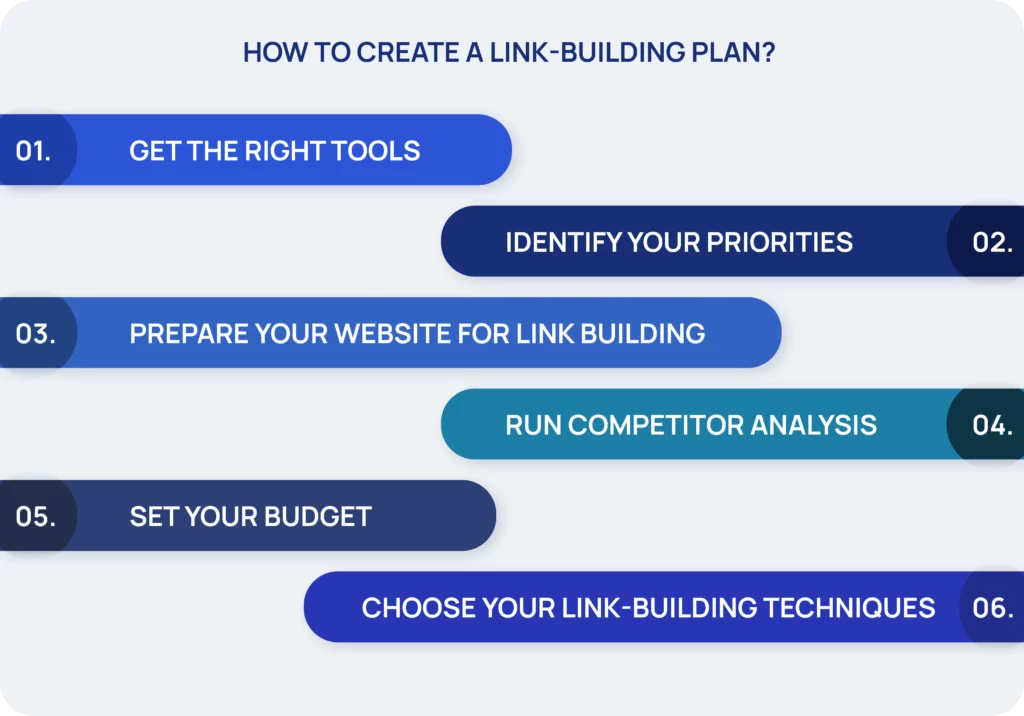
Developing a high-authority profile is no longer a job that can be automated or outsourced to low-level suppliers. It needs a deep understanding of the market and a commitment to producing high-value possessions. The most successful companies in 2026 are those that treat their link profile as a reflection of their brand's real-world authority. They focus on being the source of news, the company of information, and the voice of competence. When these components are in place, the links follow naturally, and the profile ends up being a powerful barrier to entry for competitors.
The 2026 search environment rewards those who contribute to the web instead of those who simply attempt to extract worth from it. By focusing on utility, validated identity, and topical sovereignty, a site can develop a backlink profile that not just ranks well but likewise develops authentic trust with its audience. This trust is the most important currency in an age of automated noise. Those who understand this shift will find themselves at the top of the search engine result, while those who cling to the methods of the past will discover their visibility gradually eroding in an increasingly advanced digital world.
Protecting a location in the future of search needs a proactive stance. Keeping track of the health of an existing profile, cleaning up outdated or unimportant citations, and continuously looking for brand-new methods to provide value are the trademarks of a contemporary strategy. The tools and algorithms will continue to change, but the basic principle of the 2026 search engine remains the same: authority needs to be made through constant, proven quality.

Latest Posts
Optimizing PR and SEO Tools
Why High-Impact Links Matter for 2026 SEO
How to Get High DA Backlinks for Authority